

Coping With Social Anxiety Walking Dogs
Table of Contents
- Understanding Social Anxiety and Reactive Dogs
- Grounding Techniques for Dog Parents Feeling Anxious on Walks
- How to Advocate for Your Reactive Dog Without Feeling Awkward
- How to Handle Unwanted Advice While Walking Your Dog
- Finding Your People: Reactive Dog Community Support Groups
- Building a Sustainable Walk Routine That Works for You
- Small Wins Matter: Celebrating Progress on Your Own Terms
- Frequently Asked Questions
Understanding Social Anxiety and Reactive Dogs
Walking a reactive dog while managing your own anxiety feels isolating. You're managing your dog's fear or frustration while also dealing with your racing heart, strangers' stares, and replayed awkward encounters. Many dog parents experience social anxiety walking dogs, worry about how others perceive your dog, stress about their behavior, and your own nervousness in public spaces. Understanding this connection between your emotional state and your dog's is the first step toward manageable walks.
Reactivity stems from fear, anxiety, frustration, excitement, overstimulation, pain, or learned behavior. When you're tense, your dog picks up on that energy through your body language and leash tension. The path forward isn't about eliminating anxiety or "fixing" your dog, it's about building tools that help you both feel safer and more confident. Small shifts in how you manage your nervous system create real changes in how your dog responds.
Grounding Techniques for Dog Parents Feeling Anxious on Walks
Grounding techniques redirect your focus from worry to the present moment, and that shift in your energy matters.
The 5-4-3-2-1 Sensory Method
This technique anchors you to the present by noticing 5 things you see, 4 you feel, 3 you hear, 2 you smell, and 1 you taste. It gives your anxious brain something concrete to do instead of spinning through "What if?" scenarios. Most dog parents find this helpful right before or during a walk when anxiety is building.
Box Breathing for Immediate Calm
Box breathing resets your nervous system in under two minutes: breathe in for 4 counts, hold for 4, breathe out for 4, hold for 4, repeat 5-10 times. Your nervous system responds to slow, deliberate breathing. When you're calm, your dog has a better chance of calming too.
How to Advocate for Your Reactive Dog Without Feeling Awkward
One of the hardest parts of social anxiety walking dogs is asking for space. Clear, confident advocacy reduces anxiety because it removes the guesswork.
Scripts That Actually Work
Having words ready means you don't have to improvise. For dogs approaching: "My dog needs space. Can you please call your dog back?" For comments: "We're working on it. Thanks for understanding." For advice: "We have a trainer. We're following their plan." The key is brevity, short, clear statements reduce the back-and-forth that fuels anxiety.
Using Apparel as Advocacy
Wearing something that communicates your dog's needs before anyone gets close is powerful advocacy. It shifts the burden of explanation from you to your clothing.
The Give Us Space Reactive Dog T-Shirt sends a clear message without requiring you to say a word. Your dog's needs are visible. Strangers can see the boundary before they approach. Many dog parents find this reduces anxiety significantly because they're no longer bracing for unwanted interactions.
Similarly, the Boundary Setter Reactive Dog Crewneck makes a statement while keeping you comfortable on walks and training days. It's not just about managing other people, it's about feeling supported and understood while you're managing something difficult.
How to Handle Unwanted Advice While Walking Your Dog
People will comment, offer solutions, or suggest things that won't work or are actively harmful. The challenge isn't just the comment, it's the split-second decision you have to make while managing your dog, your nervous system, and a stranger's expectations. That cognitive load is real and exhausting.
Recognizing What You're Actually Hearing
Categorize comments quickly: Judgment disguised as concern ("Your dog is so aggressive") is about the speaker's discomfort, not your dog's welfare. Dominance-based or aversive advice ("show him who's boss," shock collars, flooding) is harmful and can be safely ignored. Genuine curiosity ("Why does he do that?") isn't an attack. Advice from actual experts (certified behavior consultants, your vet, qualified trainers) is worth considering. Most comments fall into the first two categories, so your response becomes simpler once you identify that.
Response Strategies That Protect Your Energy
You have three options: Brief acknowledgment and exit ("Thanks for the thought. We're working with a trainer") then keep walking. Boundary statement ("I'm not looking for advice right now") then keep moving. No-response response, nod, smile slightly, and keep walking. Not every comment deserves words.
What Not to Do
Resist over-explaining. Don't defend your dog's behavior, justify training choices in detail, or apologize excessively. Each invites more conversation and reinforces the idea that you need permission for how you manage your dog.
The Real Work: Separating Their Discomfort from Your Responsibility
When someone comments, they're uncomfortable, their nervous system was triggered. That's not your problem to solve. Your job is to manage your dog safely and build their confidence. You're not responsible for making strangers comfortable, educating them, or proving you're a good dog parent. The moment you accept that, these interactions lose their power. If your anxiety spikes, use the 5-4-3-2-1 method or box breathing to reset. You don't have to respond in the moment. Your dog is watching how you handle pressure. When you stay calm and don't engage with judgment, they learn that strangers' comments aren't a threat.
Finding Your People: Reactive Dog Community Support Groups
The isolation of having a reactive dog is real. You skip the dog park, time walks to avoid crowds. Community changes that. When you find people who get it, celebrate your small wins, and understand the emotional weight, everything shifts.
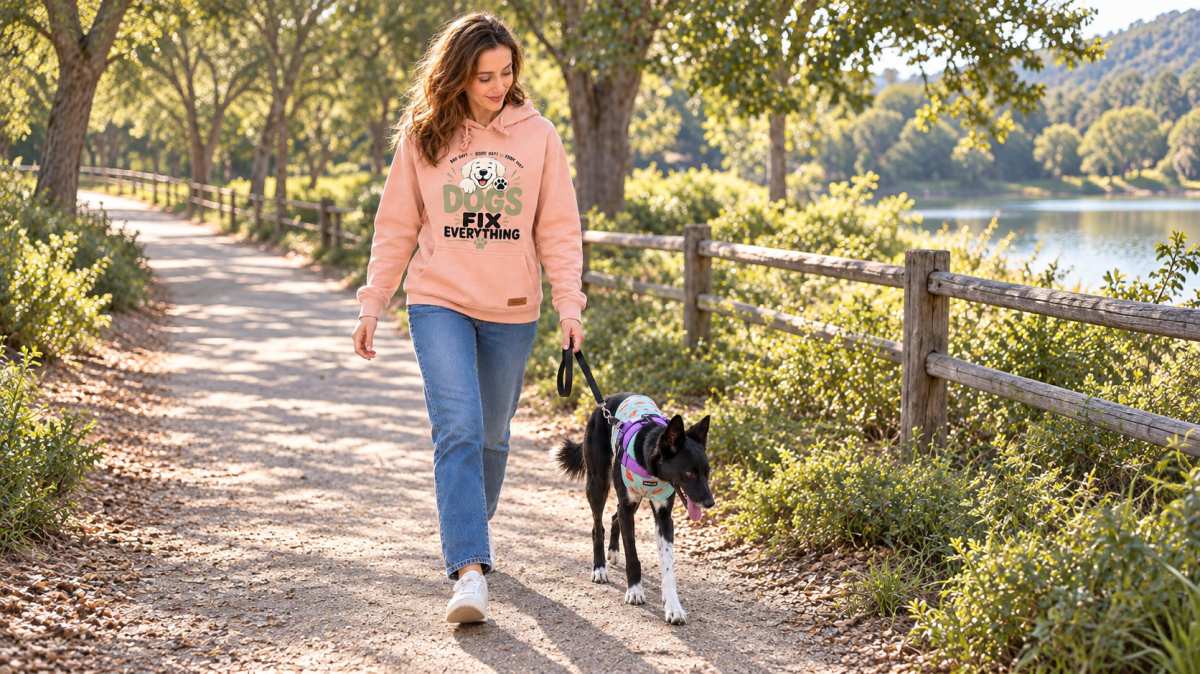
Online Communities and Local Groups
Online spaces let you connect without in-person pressure. Look for groups specifically focused on reactive dogs, not general training, they understand your dog isn't broken. Local groups offer accountability, real friendships, and walks with people who get it. Some are formal training groups, others informal meetups.
Boundary Setter Reactive Dog Crewneck →
What to Look For in a Supportive Community
Look for communities with no shame language ("reactive," "anxious," "fearful" instead of "aggressive" or "broken"), reward-based approaches, realistic expectations about non-linear progress, space for different dogs, and actual connection, not just scrolling.
Building a Sustainable Walk Routine That Works for You
A sustainable routine doesn't mean rigid, it means predictable enough that both you and your dog know what to expect, which reduces anxiety for both of you.
Start with an Honest Baseline
Be honest about what you can handle: Duration (how long before anxiety spikes), Time of day (when foot traffic is lightest), Route (fewest triggers), Support (alone or with a partner), and Trigger density (locations where your dog escalates). Write these down, this is your baseline.
The Three-Walk Structure
Walk 1: The confidence walk is your easiest route where your dog is most settled. Consistency matters more than duration. Do this walk the same time and route daily or every other day. Walk 2: The practice walk is slightly longer with a few more variables. Practice grounding techniques when mild anxiety shows up. Do this 1-2 times per week. Walk 3: The challenge walk has more foot traffic or dogs. Only do this when you're resourced and your dog shows improvement on the other two walks. It's optional and can be skipped on hard weeks.
How Consistency Builds Confidence (The Mechanism)
Consistency reduces decision fatigue and creates predictability. Your dog learns what to expect and their nervous system doesn't have to stay in high alert. For you, automatic walks (same time, same place) mean less anxiety to attach to. After 2-3 weeks of consistent easy walks, both nervous systems settle into a rhythm, and you can gradually introduce the practice walk.
Managing Triggers Progressively
Once you have a baseline routine, work with triggers intentionally by gradually expanding your comfort zone. If your dog lunges at other dogs, avoid them on confidence walks, then choose practice walks where you might see dogs. Use grounding techniques and create distance.
Measuring Progress Without Obsessing
Progress isn't always visible in the moment. You won't see a dramatic change week to week. But over a month, patterns emerge.
Keep a simple log (even just notes on your phone):
- Date and route
- Your anxiety level at the start (1-10)
- Your anxiety level at the end (1-10)
- Your dog's reactivity (none, mild, moderate, intense)
- One thing that went well
When to Adjust Your Routine
Life happens. Some weeks you're more anxious. Some weeks your dog is more reactive. Some weeks you're managing other stress.
Small Wins Matter: Celebrating Progress on Your Own Terms
Progress with a reactive dog isn't linear. Some days your dog is calmer. Some days they're worse. Some days you handle your anxiety better. Some days you don't.
This is normal. This is expected.
Frequently Asked Questions
What grounding techniques can I use when I feel anxious on walks with my reactive dog?
Grounding techniques anchor you to the present moment. The 5-4-3-2-1 sensory method (name five things you see, four you can touch, three you hear, two you smell, one you taste) works well during walks. Box breathing, inhale for four counts, hold for four, exhale for four, hold for four, calms your nervous system in seconds. These techniques reduce your stress, which your dog can sense, creating a calmer environment for both of you.
How can I advocate for my reactive dog's space without feeling awkward?
Advocacy starts with clear, simple language. Try: 'My dog needs space' or 'We're working on this, thanks for understanding.' You don't owe detailed explanations. Many dog parents wear apparel that communicates boundaries for you, like the Give Us Space Reactive Dog T-Shirt, which signals your needs without conversation. This removes the social burden and lets your clothing do the talking.
Where can I find other dog parents who understand social anxiety and reactive dogs?
Online communities and forums offer 24/7 support from people living your experience. Local training classes and veterinary behaviorist offices often know of in-person meetup groups. Look for communities that emphasize reward-based training and emotional validation, not judgment. Real connection happens when people get it without explanation.
What should I do when someone gives me unwanted advice about my reactive dog on a walk?
You don't need to engage. A simple 'Thanks, we have a plan' or 'We're working with a trainer' ends the conversation respectfully. If you feel unsafe or the person is escalating, it's okay to move away. Remember: their opinion doesn't define your dog or your efforts. Many reactive dog parents find that wearing advocacy apparel reduces unsolicited comments because your stance is already clear.