

How to Maintain Confidence With Reactive Dogs
Table of Contents
- Understanding Reactivity and Confidence
- How to Calm a Reactive Dog: Building Blocks for Success
- Reactive Dog Walking Tips: Managing Triggers Outdoors
- What Not to Do With a Reactive Dog
- How Long Does Dog Reactivity Training Take: Setting Realistic Expectations
- Building Your Own Confidence as a Reactive Dog Parent
- Moving Forward: Small Wins and Sustained Progress
- Social Caption
- Frequently Asked Questions
- Sources
Last Updated: October 17, 2026
Understanding Reactivity and Confidence
What Reactivity Really Means
Reactivity is how your dog communicates when they're overwhelmed, scared, frustrated, or overstimulated. A reactive dog might bark, lunge, freeze, or pull on leash, behavior that tells you what they're feeling.


Reactivity may stem from fear, anxiety, excitement, pain, learned behavior, or a mix of factors. Your dog's reactivity isn't a character flaw or a sign they're broken. It's information.
Seeing your dog as communicating distress rather than being "bad" is where maintaining confidence with reactive dogs begins.
Why Confidence Matters
Your dog reads your energy. When you're tense or braced for a reaction, they feel it, and that tension often makes reactivity worse.
Confidence doesn't mean your dog never reacts. It means you trust yourself to handle what happens. You know your dog's triggers.
Dogs with confident owners often recover faster from stressful moments and build resilience because they know you've got their back.
How to Calm a Reactive Dog: Building Blocks for Success
Recognizing Early Stress Signals
Before your dog barks or lunges, they show signs of stress. Spotting these early signals gives you time to create distance or redirect before reactivity escalates.
Watch for:
- Stiff body posture or frozen movement
- Ears pinned back or forward in a fixed position
- Tail tucked or held high and rigid
The moment you notice these signs, move away, create space, or offer your dog something engaging. Acting early prevents the big reaction and builds your confidence.
Creating a Safe Space at Home
A safe space is a quiet area where your dog can decompress without pressure, a crate, a specific room, or a corner with a bed.
Make it appealing:
- Place it away from high-traffic areas
- Add a comfortable bed or blanket
- Keep it free from surprises or interruptions
Your dog learns they can retreat when overwhelmed, which builds confidence because they have control over their environment. You build confidence too, because you're giving your dog what they need instead of pushing through a reaction.
Using Positive Reinforcement and Rewards
Reward-based training works. When your dog does something you like, even something small, like looking at you instead of the trigger, mark it and reward it immediately.
Rewards can be:
- High-value treats (small, soft, smelly)
- Play or toys they love
- Praise and gentle touch
Timing matters: reward within a second of the behavior you want so your dog connects the reward to that action, not to the trigger itself.
This builds your confidence because you're actively shaping behavior, not just managing chaos.
Reactive Dog Walking Tips: Managing Triggers Outdoors
Walks test your confidence because you can't control what comes around the corner. The goal isn't zero triggers; it's a walk where your dog stays under threshold long enough to learn, with a plan for when things go sideways.
Find Your Dog's Working Distance
Every reactive dog has a distance at which they can still notice a trigger, think, and take a treat. Inside that distance, the thinking brain goes offline and training stops working. Don't guess, measure it.
A simple way to find it:
- Pick a quiet spot where you can see dogs or people at a distance but they aren't close.
- Watch your dog's ears, body, and tail as a trigger appears. Note the point where they first notice but can still turn back to you and eat.
- Step back a few feet and repeat on another day. The distance where your dog can notice, disengage, and take food is your working distance.
- Write it down, ten feet, thirty feet, across a parking lot. That number is your baseline to shrink over time.
If your dog won't take food, that's information too: you're likely already inside their working distance and need more space, not a better treat.
The Three-Distance Rule for Every Walk
Think in three zones rather than one:
- Green zone: Your dog notices a trigger and can still eat, look at you, or sniff. This is where learning happens. Stay here.
- Yellow zone: Ears pin, body stiffens, staring starts. You're close to the edge. Create distance now, before the bark.
- Red zone: Barking, lunging, frantic pulling. Your dog is over threshold and can't learn in this state. Get out of the situation and let them decompress.
Most handlers only react in the red zone. Confident handlers act in the yellow zone, which is why their walks look calmer. The earlier you catch the shift from green to yellow, the less distance you need to create.
Planning Routes Around Success, Not Convenience
Route planning is really trigger budgeting. Before you leave, ask what your dog can handle today:
- Walk at off-peak times when fewer dogs and people are out.
- Choose wide streets, park edges, and side paths where you can add distance without turning around.
- Note pinch points like blind corners, narrow sidewalks, and busy intersections, and plan an exit before you reach them.
End every walk on a green-zone note. If the last block was rough, take five quiet minutes on a side street before going home so the walk doesn't end on a stress spike.
What to Do in an Unexpected Close Encounter
This is the situation most guides skip and the one that shakes handler confidence most: an off-leash dog charges, someone rounds a corner with a dog, or a stranger reaches for your dog.
- Turn and create distance first. Put your body between your dog and the approaching dog or person, and move away at a brisk but calm pace. Don't wait to explain.
- Use a clear, short cue. "We need space!" or "My dog needs distance, please!" works better than a long explanation. Say it early and loudly enough to be heard.
- Use the environment. Step behind a parked car, cross the street, or put a barrier between you and the trigger. Physical distance beats a training exercise in an emergency.
- Keep your leash loose if you can. A tight leash adds tension your dog feels. If you must hold firm, hold your ground rather than yanking.
- Get out, then decompress. Once you're clear, find a quiet spot, let your dog sniff and shake off, and give them a few minutes before moving on.
If an off-leash dog is approaching and your dog is at risk, a treat scatter can buy a second or two of sniffing while you create distance.
Advocating for Your Dog's Space
Other people often don't understand reactivity. They may let their dog approach, ignore your request, or make assumptions. Your job is to advocate clearly and confidently:
- Use body language: step between your dog and the approaching dog or person.
- Speak up early: "My dog needs space, please keep your dog away."
- Move away if someone doesn't listen.
Many dog parents find that apparel with a clear message helps. The EARSBACK Give Us Space Reactive Dog T-Shirt or Boundary Setter Reactive Dog Crewneck communicates your dog's needs without words, and other people often give your dog space before an interaction even starts.
This builds your confidence because you're not hiding or apologizing, you're protecting your dog and setting boundaries.
What Not to Do With a Reactive Dog
Avoid approaches that create fear or pain:
Boundary Setter Reactive Dog Crewneck →
- Don't use shock collars, prong collars, or pinch collars
- Don't punish your dog for reacting
- Don't force your dog to "face their fears" without support
These methods damage trust and often make reactivity worse. Your confidence erodes because you're relying on force instead of understanding.
Instead, focus on reward-based training, distance management, and creating positive experiences. Your dog learns that calm behavior gets good things. You build confidence together.
How Long Does Dog Reactivity Training Take: Setting Realistic Expectations
There's no universal timeline, and anyone who promises one isn't being honest with you. Reactivity is an emotional response, and changing one takes repetition over weeks and months, not days. What you can control is measuring the right things and progressing at a pace your dog can handle.
Measure Progress Beyond the Bark
"My dog didn't bark today" is a fragile metric. It depends on what you happened to encounter and tells you nothing about whether your dog is actually feeling calmer. Track these instead:
- Recovery time: How long after a trigger passes does your dog return to normal? A dog who used to need twenty minutes to settle and now needs five is making real progress, even if they still barked.
- Trigger distance: At what distance can your dog notice a trigger and still take food or look at you? If that number is shrinking, you're winning, even slowly.
- Disengagement: Can your dog look at a trigger and then choose to look back at you or sniff the ground? That's a thinking dog, and a thinking dog can learn.
Write these down after walks, a simple note on your phone is enough. Patterns you can't see day to day become obvious over a month.
A Staged Confidence Plan with Progression Criteria
Confidence builds in layers, and each layer has a gate you pass before moving up.
Stage 2: Low-distraction outdoors. Move to a quiet yard, driveway, or empty park at off-peak hours.
Stage 3: Controlled distance. Practice near triggers at your measured working distance, where your dog can notice and still think.
Stage 5: Real-world walks. Apply the skills on normal routes with normal unpredictability.
When to Seek Professional Support
You don't have to figure this out alone. A certified behavior consultant or veterinary behaviorist can assess your dog's specific triggers and stress level, design a tailored plan, help you read what your dog is communicating, and support you when progress feels slow.
Contact a veterinarian, veterinary behaviorist, certified behavior consultant, or qualified reward-based trainer if:
- Your dog's reactivity is escalating.
- You're unsure whether your dog might bite.
- Your dog's behavior suddenly changes.
When choosing a professional, look for credentials such as board certification in veterinary behavior, certification through a recognized behavior consultant body, or a trainer who uses humane, reward-based methods and is transparent about their qualifications.
Building Your Own Confidence as a Reactive Dog Parent
Your confidence matters as much as your dog's. When you're stressed, your dog picks up on it. When you trust yourself, your dog feels safer.
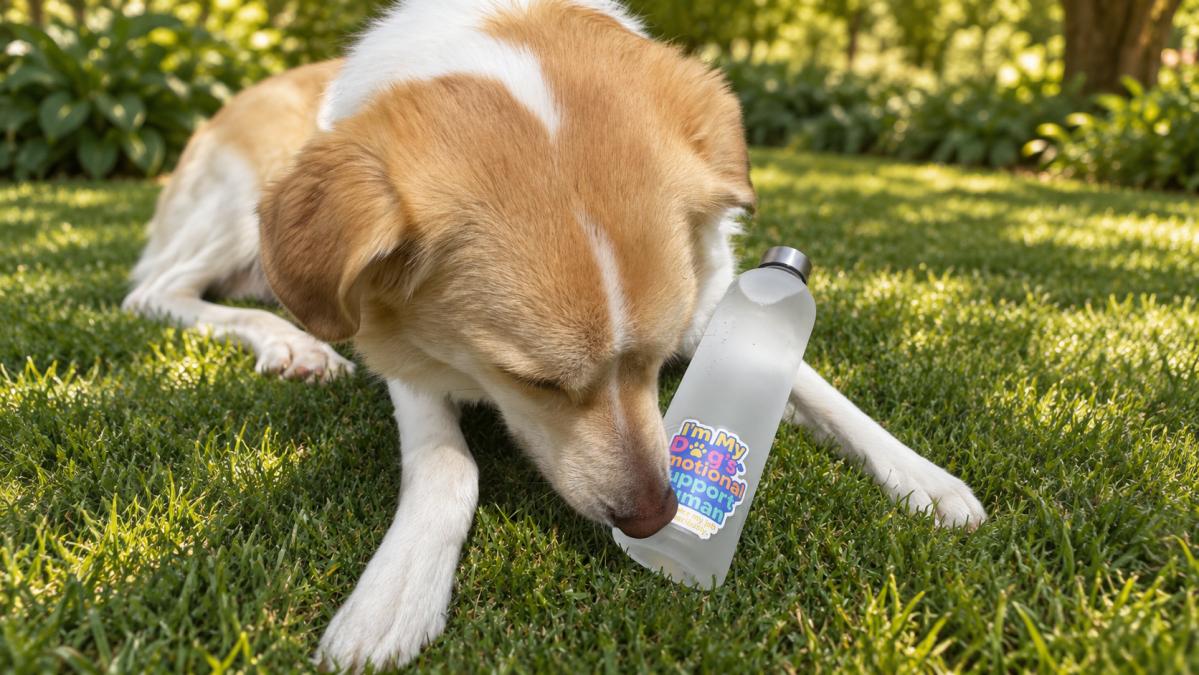
Build your confidence by:
- Learning what reactivity actually is (not a reflection of your dog's character or your skills)
- Recognizing that you're doing hard work and showing up every day
- Celebrating small wins instead of fixating on setbacks
Many dog parents find that being part of a community helps.
EARSBACK exists for this reason. When you wear something that says "my dog needs space" or "big feelings welcome," you're saying it out loud.
Moving Forward: Small Wins and Sustained Progress
How to maintain confidence with reactive dogs is about consistency, patience, and self-compassion. Some walks will be harder than others.
That's normal. It doesn't mean you're failing.
Progress looks like:
- Recognizing your dog's early stress signals faster
- Moving away before reactivity escalates
- Rewarding calm behavior consistently
Your dog doesn't need perfection. They need you to show up, understand what they're communicating, and keep them safe.
Maintaining confidence with a reactive dog isn't about fixing your dog. It's about understanding them, managing their environment, and building trust together.
Ready to express your commitment to your reactive dog? From the Give Us Space Reactive Dog T-Shirt to the Reactive Give Space Floral Dog Bandanas, each piece celebrates the bond you share and the boundaries your dog deserves.

Social Caption
Your reactive dog isn't broken, and neither are you. Learn how to maintain confidence with reactive dogs through distance management, reward-based training, and self-compassion. Small wins add up. Your dog is reading your energy, so trust yourself. Read our guide and find out how other dog parents are showing up for their reactive dogs every single day. #ReactiveDogsWelcome #DogParentLife #ReactivityIsNotAggression #EARSBACK
Frequently Asked Questions
What is the 3-3-3 rule for dogs with anxiety?
The 3-3-3 rule is a guideline for rescue and newly adopted dogs: 3 days to decompress, 3 weeks to adjust to routine, and 3 months to truly settle in. For reactive dogs, this principle applies broadly, decompression and recovery time matter. Your dog may need space to process new environments and experiences. Don't rush progress or expect confidence to build overnight. Patience and consistent, low-pressure exposure help your dog's nervous system reset.
How long does it take to help a reactive dog build confidence?
There's no universal timeline. Some dogs show progress in weeks; others need months or years. What matters is consistent, reward-based work and realistic expectations. Progress isn't always linear, your dog may improve, then regress during stressful periods or trigger stacking. Focus on small, measurable gains: a slightly longer calm moment, a quicker recovery, or a willingness to try something new. Celebrate these wins, and work with a certified behavior consultant if progress plateaus.
What should I avoid doing with a reactive dog?
Avoid punishment, intimidation, flooding (forcing exposure to triggers), and aversive tools like shock collars or prong collars. Don't expect your dog to 'just get over it' or compare their timeline to other dogs. Avoid overwhelming outings when your dog is already stressed. Don't skip veterinary checks for pain or medical issues that may fuel reactivity. Finally, avoid isolating your dog completely, they need some positive, manageable exposure to build confidence, not endless avoidance.
How can I stay calm when my dog reacts on a walk?
Your dog reads your energy. Practice deep breathing before walks and during reactions. Remind yourself that your dog's reaction isn't a reflection of your parenting. Have a plan: know your quiet routes, carry high-value treats, and give yourself permission to turn around or cross the street. Wear something that reminds you of your identity as a thoughtful dog parent, like the Boundary Setter Crewneck or Give Us Space T-Shirt, to reinforce that you're doing the right thing by managing your dog's space and stress.
Sources
American Veterinary Society of Animal Behaviorists (AVSAB) Position Statement on Punishment
International Association of Animal Behavior Consultants (IAABC) guidance on reward-based training
ASPCA resources on understanding dog behavior and stress signals