

How to Choose Dog Walking Clothes for Winter
Table of Contents
- Start With a Simple Winter Dog Walking Checklist
- What to Wear for Winter Dog Walking: Match Your Outfit to the Weather
- Layering Clothes for Winter Walks: Base, Mid, and Outer
- Waterproof Clothes for Dog Walking: Rain, Wet Snow, and Wind
- Winter Dog Walking Pants: What to Look For
- Fit, Mobility, and Leash-Handling Details That Matter
- Conclusion: Dress for the Walk You Actually Take
- Frequently Asked Questions
Last Updated: October 13, 2026
Start With a Simple Winter Dog Walking Checklist
Choosing dog walking clothes for winter comes down to one idea: dress for the walk you actually take. Layers you can add or remove, a warm base layer, a fleece mid layer, and a weatherproof outer layer, cover most winter conditions. Add warm pants, gloves, and a hat, and you can handle almost anything.
The 6 Items Every Cold-Weather Walker Needs
- A moisture-wicking base layer to keep sweat off your skin.
- A fleece or wool mid layer for insulation and warmth.
- A waterproof shell for rain, wet snow, and wind protection.
- Winter walking pants that block wind and let you move.
- Gloves and a warm hat you can still use a leash with.
- Water-resistant boots with grip for traction on ice and slush.
Most people get the coat right and skip the rest. That is where winter walks fall apart.
What to Wear for Winter Dog Walking: Match Your Outfit to the Weather
What you wear for winter dog walking should match the temperature, precipitation, and how long you plan to be outside. A 15-minute loop in mild weather looks nothing like an hour in freezing conditions.
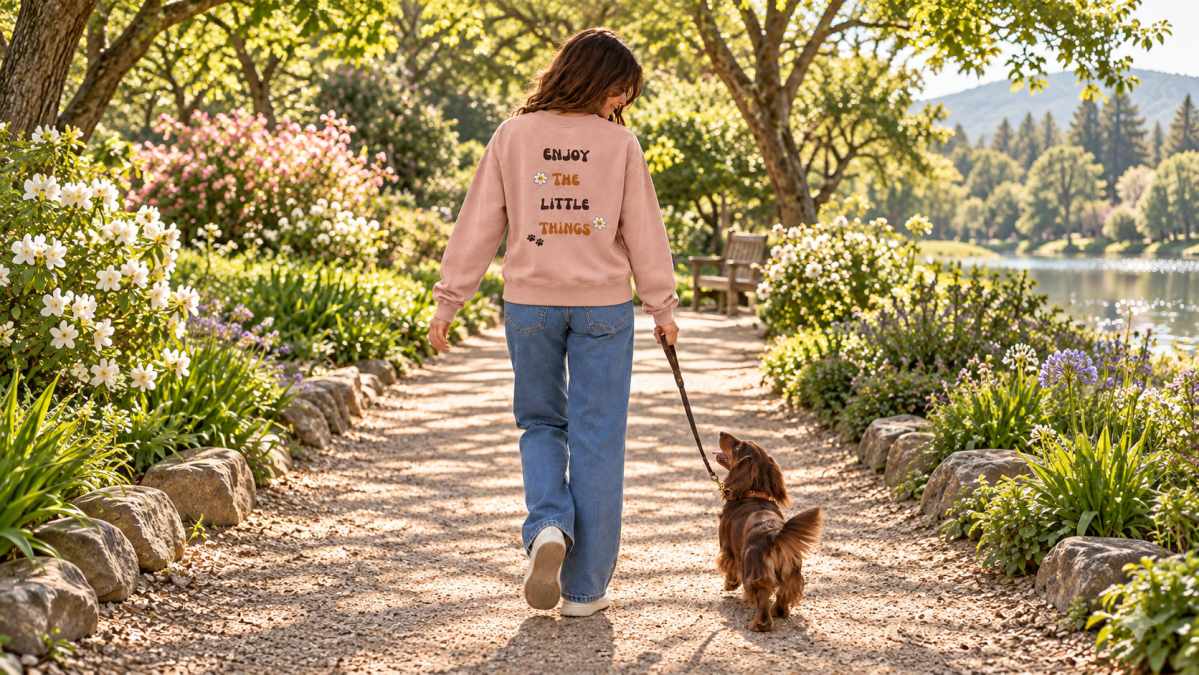
Mild Days (Above 40°F): Light Layers and a Vest
Mild winter days call for light layers, not heavy insulation. A long-sleeve base layer plus a vest gives you warmth and freedom of movement.
- Base layer: breathable long-sleeve tee or light thermal
- Mid layer: a dog lover crewneck or light fleece
- Outer layer: a vest, or a packable shell if rain is likely
This is the range where people overdress and sweat, which chills you the moment you slow down.

Freezing Conditions (Below 32°F): Insulation and Wind Protection
Freezing conditions call for real insulation and a wind-blocking outer layer. Cold tolerance varies, so treat these as starting points.
- Base layer: thermal or merino
- Mid layer: fleece or wool
- Outer layer: insulated, wind-resistant shell
Wind is the part people underestimate. A still 28°F morning feels very different from a windy one.
| Conditions | Base Layer | Mid Layer | Outer Layer | Bottoms |
|---|---|---|---|---|
| Mild, above 40°F | Light tee | Crewneck or light fleece | Vest | Regular pants |
| Cold, 32-40°F | Thermal | Fleece | Light shell | Leggings or lined pants |
| Freezing, below 32°F | Thermal or merino | Fleece or wool | Insulated shell | Insulated winter pants |
| Wet snow or rain | Moisture-wicking | Fleece | Waterproof shell | Water-resistant pants |
Layering Clothes for Winter Walks: Base, Mid, and Outer
Layering clothes for winter walks works because each layer has one job. The base layer manages moisture, cotton holds sweat and gets cold fast, while synthetics and merino stay drier and warmer. The mid layer is your insulation (fleece, wool, or a lightweight puffer vest), and it is the layer you shed when you warm up mid-walk.
Waterproof Clothes for Dog Walking: Rain, Wet Snow, and Wind
Waterproof clothes for dog walking matter most in wet weather, because wet fabric pulls heat out of your body fast. A waterproof shell is the single biggest upgrade for rainy and snowy walks: water-resistant gear handles light drizzle, while waterproof gear handles steady rain and wet snow. What most guides skip is what actually makes a shell waterproof, how to keep it that way, and how to dry it.
What Actually Makes a Shell Waterproof
Three things do the work, and a jacket needs all three:
- A face fabric with a durable water repellent (DWR) finish. This coating makes rain bead up and roll off. DWR wears off over time, which is why an older jacket can feel damp even when the membrane underneath is intact.
- A waterproof membrane or coating. This blocks liquid water while letting some vapor escape, separating a true waterproof shell from a water-resistant windbreaker.
- Taped or sealed seams. Every stitch hole is a potential leak. A jacket with a waterproof membrane but untaped seams will often leak at the shoulders and hood in steady rain.
Labels often list a waterproof rating in millimeters, which measures how much water pressure a fabric can hold before it leaks. Higher numbers generally mean better performance in sustained rain.
Water-Resistant vs. Waterproof vs. Water-Repellent
These terms get used interchangeably, and they are not the same:
- Water-repellent usually means a DWR finish only. It sheds light rain and wet snow, then wets out.
- Water-resistant means the fabric resists water for a while but is not fully sealed. Fine for a quick loop in light precipitation.
- Waterproof means a membrane or coating plus sealed seams. This is what you want for steady rain, wet snow, and long walks.
Features Worth Checking Before You Buy
- Taped or sealed seams, not just a coated fabric
- A hood that fits over a hat and adjusts at the back
- Adjustable cuffs, ideally with a soft inner cuff to keep wind and water out
Wind protection matters even when it is not raining. A windproof shell over a fleece can feel warmer than a heavier coat alone, because wind strips the warm air layer your body builds up.
How to Care for and Re-Waterproof Your Shell
This is the step almost nobody talks about, and it is the reason a good jacket stops working after one season.
- Wash it. Dirt, oils, and dog hair clog the DWR finish and the membrane's pores, so a grimy jacket can wet out even when it is technically still waterproof. Follow the care tag, most shells want a gentle cycle with a technical wash rather than regular detergent.
- Skip fabric softener and dryer sheets. They coat the fabric and kill water repellency.
- Reactivate the DWR with heat. Many shells just need a low tumble dry or a quick pass with a warm iron (check the tag first).
Drying and Storing Wet Gear
Winter walking means coming home wet most days. A little routine keeps your gear usable:
- Shake off snow and slush before you go inside so it does not melt into the fabric.
- Hang the shell and pants separately so air moves between them.
- Stuff gloves and a hat with a dry towel or hang them open, never leave them balled up in a pocket.
Visibility in Low Light
Winter walks often happen in the dark, and visibility is a safety item, not an afterthought. Choose lighter colors or add reflective details to your outer layer so drivers can see you. Reflective trim on the cuffs, hem, and back catches headlights earlier than a dark jacket, and a small clip-on light on your jacket or leash adds another layer of being seen.
Winter Dog Walking Pants: What to Look For
Winter dog walking pants should block wind, shed light moisture, and let you bend, squat, and step over a leash without fighting the fabric. Fleece-lined and insulated options work well for freezing conditions, while water-resistant softshell pants cover most wet winter days.
What to check before you buy:
- Stretch at the hips and knees for freedom of movement
- A water-resistant finish for wet snow and light rain
- Ankle cuffs that stay down over your boots
A common mistake is buying snow pants built for skiing, warm, but often too bulky for the stop-and-go rhythm of a dog walk.
Fit, Mobility, and Leash-Handling Details That Matter
Fit and mobility decide whether your winter gear actually works on a real walk. A dog walk is not a straight line, you stop, turn, crouch, reach for a leash, and bend to pick up after your dog. Clothing that fights those movements turns a 20-minute loop into a wrestling match.
Why Articulated Knees and Gussets Matter
Two construction details do most of the work in winter walking pants:
- Articulated knees. Instead of a straight tube of fabric, the knee is cut with a slight bend built in, so when you squat to pick up after your dog or kneel to adjust a boot, the fabric does not pull tight or ride up your calf.
- A crotch gusset. This diamond or triangular panel sewn into the crotch seam adds room for stepping over a leash, climbing a snowbank, or lifting a leg without the seam digging in. Pants without a gusset tend to feel restrictive the moment you move in any direction other than forward.
If you only check two things on a pair of winter walking pants, check these.
Stretch, Fabric Weight, and the Overheating Trap
Stretch fabric moves with you instead of against you, which matters most at the hips and knees. But stretch and insulation pull in opposite directions: the warmer the pants, the less you usually want to move in them. Walkers often buy the warmest pants they can find, then overheat on a brisk 15-minute loop.
Cuff and Hem Design
Cuffs are where winter pants either work or fail:
- A cuff that stays down over your boots keeps snow out and stops cold air from creeping up your ankle.
- An adjustable cuff (a drawcord, hook-and-loop tab, or elastic) lets you cinch it over different boot heights.
- A slightly tapered hem reduces the chance of catching the fabric on your other foot or on a leash.
A hem that drags in slush soaks up water and wicks it up the leg, a small detail that ruins an otherwise good pair of pants.
Pockets That Actually Work With a Leash in Your Hand
Pocket placement matters more in winter than any other season, because you are wearing gloves and often holding a leash:
- A zippered or snap-closure pocket keeps keys, a phone, and bags from falling out when you bend down.
- A pocket you can reach with your non-leash hand is the one you will actually use.
- A dedicated treat pocket, even a small one, saves you from digging through a jacket mid-walk.
Gloves, Leashes, and Hand Freedom
Gloves are the piece of winter gear most likely to interfere with leash handling:
- Grip matters more than warmth. A textured palm or rubberized grip lets you hold a leash securely without clenching.
- Dexterity matters for clips and bags. If you cannot open a poop bag or clip a leash with your gloves on, you will take them off, and then your hands get cold.
- A leash you can loop over your wrist gives you a free hand for treats, bags, or a phone.
If your dog is reactive, anxious, or easily overwhelmed, gear that keeps your hands free and your movement calm can help you both stay steady. That is not a training fix, it is just one less thing to manage on a hard walk. If your dog's reactivity is escalating, involves a bite risk, or changes suddenly, that is a conversation for a veterinarian, a veterinary behaviorist, a certified behavior consultant, or a qualified reward-based trainer.
Test Your Layers Before a Long Walk
Before you commit to a new winter outfit on a long walk, do a short loop in it. Pay attention to:
- Whether your sleeves stay put when you reach out to clip a leash
- Whether your hood blocks your side vision (you need to see your dog)
- Whether you can squat, turn, and step over a leash without the fabric pulling
A comfortable, familiar layer makes those harder walks feel a little more manageable. Many of our customers tell us their EARSBACK Signature Dog Lover Crewneck is an easy mid layer for training days and cold walks, and the Dogs Fix Everything Hoodie works well for the days when you just need to get out the door.

Conclusion: Dress for the Walk You Actually Take
The hardest part of winter walking is not the cold. It is showing up on the days when the weather is miserable and your dog still needs the walk. Dressing well makes those days easier to face.
At EARSBACK, we make comfortable everyday layers for dog parents who show up for their dogs, big feelings and all. Explore our Another Dog Ahead Dog Lover Crewneck and the Easily Distracted Dog Lover Crewneck, and find a layer that feels like yours.

Frequently Asked Questions
How do you choose clothes for winter dog walks?
Start with the temperature, wind, and precipitation for that specific walk. Build three layers: a moisture-wicking base layer, a fleece or wool mid layer for insulation, and a waterproof shell on top. Add winter dog walking pants, warm socks, waterproof boots, gloves, and a hat. Adjust based on walk duration and your activity level. A short neighborhood loop needs less insulation than a 45-minute trail walk in freezing conditions.
What should you wear for a short dog walk in cold weather?
For a quick 15-minute walk in mild cold, a base layer under a warm hoodie or crewneck plus a wind-resistant vest often works. Add a hat and gloves. If it is below freezing, swap the vest for an insulated jacket and wear winter dog walking pants instead of jeans. The key is being able to move freely while your dog sniffs, stops, and changes direction.
Are waterproof clothes for dog walking really necessary?
Waterproof clothes for dog walking keep you dry in rain, wet snow, and sleet. A waterproof shell blocks wind and precipitation while your base and mid layers handle warmth. Without one, wet clothing pulls heat away from your body quickly. Look for a jacket with sealed seams and a hood that stays up in wind. Water-resistant pants help too, especially on slushy sidewalks.
How do you stay warm on a long winter dog walk?
Layer clothes for winter walks so you can adjust as your body heats up. Start with a moisture-wicking base, add fleece or wool for insulation, and top with a waterproof, windproof shell. Wear winter dog walking pants, warm socks, and waterproof boots. Bring a lightweight packable layer in case you stop moving. If your dog needs a slower, sniff-heavy walk, you will generate less body heat and may need an extra mid layer.
Winter walks ask a lot of you, especially when your dog finds the world overwhelming. The right clothing will not fix a hard walk, but it can make you more comfortable while you handle it. EARSBACK makes warm, comfortable layers designed for dog parents who show up every day, including crewnecks and hoodies built for walks, training, and couch time. Add to cart and wear the message that dogs speak with their ears.