

Comfortable Clothing for Daily Dog Training
Table of Contents
- Why Comfort Matters When Training Your Dog
- Essential Features of Training Apparel
- Dog Walking Outfits That Work for Training
- What to Wear to Dog Training Sessions
- Layering Strategies for Outdoor Training
- Caring for Training Clothes: Cleaning and Maintenance
- Building Your Training Wardrobe on Any Budget
- Conclusion
- Frequently Asked Questions
Last Updated: September 25, 2026
When you're training your dog every day, what you wear matters more than you might think. Comfortable clothing for daily dog training isn't just about looking put-together on walks, it's about having the freedom to move, bend, squat, and play without restriction. At EARSBACK, we understand that dog parents spend hours on the ground, chasing treats, demonstrating sits and downs, and managing whatever comes next. The right outfit makes that work feel easier instead of fighting against your clothes.
This guide covers the essentials of building a training wardrobe that keeps up with your dog, whatever their temperament or training goals.
Why Comfort Matters When Training Your Dog
Training requires your full attention on your dog, not on your clothing. Clothes that pinch, ride up, or limit your range of motion pull your focus away from what matters: your dog's behavior and your response to it. Durable fabrics that wash well and hold up to repeated cleaning also save you money and frustration over time.
Beyond the practical side, what you wear sends a message. For reactive dog parents, training clothes can become a statement of identity. Wearing something that reflects your experience, a shirt that says "Give Us Space" or a hoodie that celebrates the small wins, helps you feel seen and supported on hard training days.

Essential Features of Training Apparel
The best training clothes share a few key qualities: moisture-wicking fabrics that pull sweat away from your skin, durability with reinforced stitching at stress points, and pockets to keep treats within reach. Adjustable straps and ergonomic design give you full range of motion for demonstrating behaviors and getting down to your dog's level. Avoid anything tight across the chest or shoulders.
Dog Walking Outfits That Work for Training
Build functional outfits with breathable base layers, mid-layers like crewnecks or hoodies, and weather-resistant outer layers as needed. Choose pants or shorts with stretch for squatting and movement. Dark colors hide dirt better than light ones. Wear non-slip shoes with good grip for stability on wet surfaces and uneven terrain.
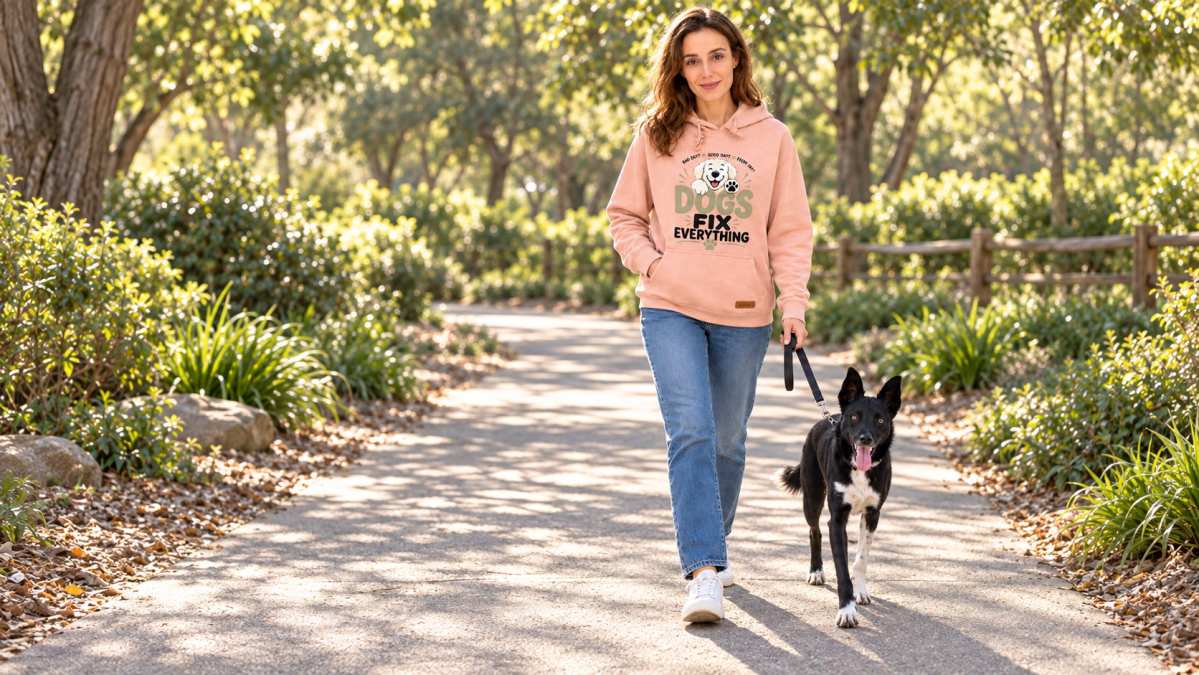
The EARSBACK Signature Dog Lover Crewneck works as a solid foundation for training days. It's soft enough for comfort during long sessions and durable enough to handle treat dust and grass. Pair it with dark pants and supportive shoes, and you have a complete outfit that works for walks, training, and coffee runs afterward.

What to Wear to Dog Training Sessions
In training classes, wear clothes that let you move freely and get on the ground without restriction. Layer so you can adjust to indoor warmth or outdoor weather changes. Wearing something like the Give Us Space Reactive Dog T-Shirt can open conversations with other dog parents and build community.
Layering Strategies for Outdoor Training
Adjust layering by season: cool months need moisture-wicking base layers plus insulating mid-layers; warm weather calls for light, quick-dry fabrics; spring and fall require flexibility to shed layers as you warm up. Build your wardrobe around the conditions where you train most often.
Caring for Training Clothes: Cleaning and Maintenance
Training clothes take a beating from kneeling in grass, handling high-value treats, and getting pawed at. Proper care keeps your gear fresh, extends its lifespan, and prevents permanent odor and staining.
Treat Residue and Sticky Buildup
Treats leave oily stains and sticky residue. Pretreat by rinsing dried crumbs under cold water, then apply stain remover to oily spots and let sit 10-15 minutes. For stubborn stains, use a small amount of dish soap on the spot before washing. Wash in cold water on a gentle or regular cycle, hot water sets protein-based stains permanently. Air-dry to avoid locking in stains; repeat pretreatment if needed.
Mud, Grass, and Ground-In Dirt
Let mud dry before brushing it off to prevent it from being worked deeper into fibers. For grass stains, soak in cold water for 30 minutes before washing, cold is essential because chlorophyll sets in warm water. For heavy mud, rinse under cold water and gently rub fabric together; avoid hard scrubbing. Air-dry after rinsing, then wash normally.
Odor and Moisture Retention
Air-dry training clothes to prevent odor-causing bacteria from thriving. For persistent smells, soak in white vinegar and cold water (1 part vinegar to 4 parts water) for 30 minutes before washing, or add half a cup of vinegar to the rinse cycle. Avoid fabric softener. Never store damp clothes in closed bags; hang them to dry completely first.
Washing and Drying Guidelines by Fabric Type
Fabric Type |
Pretreatment |
Wash Cycle |
Water Temp |
Drying |
Notes |
|---|---|---|---|---|---|
Moisture-wicking blend |
Rinse, apply stain remover |
Gentle or regular |
Cold |
Air-dry or low heat |
Preserve moisture-wicking properties |
Heavy-duty cotton |
Brush off dry dirt, soak grass stains |
Regular |
Cold |
Air-dry or low heat |
Can handle more agitation |
DWR-treated outer layer |
Rinse immediately, treat stains |
Gentle |
Cold |
Air-dry preferred |
Heat can degrade water-repellent coating |
Blended technical fabrics |
Rinse, spot-treat |
Gentle |
Cold |
Air-dry |
Avoid high heat and fabric softener |
Rotating Your Training Wardrobe
Rotate two or three complete outfits so fabrics rest between wears and extend their lifespan. If you train daily, aim for at least two pairs of pants or shorts and three to four tops. Rotate shoes too, wearing the same pair daily accelerates wear and traps moisture.
Refreshing DWR Treatment
DWR-treated outer layers gradually lose their coating with washing and wear. Low-heat drying occasionally refreshes the coating temporarily, but you may eventually need to reapply using a commercial product. Follow instructions carefully to avoid damaging the fabric.
Regular maintenance, prompt stain treatment, proper drying, and thoughtful storage, keeps your training clothes functional and fresh without constant replacement. When you invest in quality pieces, these practices protect that investment and keep your gear ready for the next training session.
Building Your Training Wardrobe on Any Budget
You don't need expensive gear to train your dog well. Budget-friendly looks different depending on your body, training environment, and accessibility needs.
Start with Basics That Fit Your Body
Start with one good pair of pants or shorts, two or three comfortable tops, and supportive shoes. Fit matters more than size, look for pants with a rise that doesn't dig in when you bend, shorts with enough length to prevent chafing, and tops that allow shoulder mobility. If standard sizing doesn't work for your body, extended-size options, tall and petite lines, and adaptive clothing brands are increasingly available. Clothes that fit well are more comfortable, last longer, and get worn more often.
Adaptive and Accessible Gear
Some dog parents train with mobility considerations, chronic pain, sensory sensitivities, or other accessibility needs. Standard training apparel doesn't always account for these realities.
If you have limited shoulder or arm mobility, look for tops with wider armholes and less structured shoulders. Some dog parents prefer looser fits to avoid pressure on sensitive areas or to allow for movement aids like braces or supports.
Seam placement matters too. Flat seams or minimal seaming reduces irritation for people with sensory sensitivities. If you overheat easily or have temperature regulation challenges, breathable, moisture-wicking fabrics become essential rather than optional.
Adaptive clothing brands increasingly offer training-appropriate pieces with features like magnetic closures, seated-fit designs, or strategic ventilation.
Layering for Different Training Environments
Your training environment shapes what you actually need. Indoor classes in climate-controlled spaces have different requirements than outdoor trails in changing weather. Urban sidewalk training differs from rural open-field work.
If you train mostly indoors, prioritize breathable fabric over weather resistance. You can skip the expensive waterproof jacket and invest in quality base layers and lightweight mid-layers instead. If you're outside year-round, layering pieces that work across seasons become your priority. One good hoodie or crewneck that works from spring through fall saves money compared to buying season-specific gear.
Consider your most common training scenario and build around that. If 80% of your training happens on neighborhood walks in mild weather, a few breathable tops and comfortable pants cover most situations. If you do weekend hikes or trail training in variable conditions, weather-resistant pieces justify the investment.
Quality Over Quantity
One durable crewneck that lasts two years beats buying five cheap shirts that fall apart after a few months. Look for reinforced stitching at stress points (shoulders, underarms, seams), fabric weight that feels substantial, and materials designed to handle repeated washing.
The Dog Mom Era Crewneck and Another Dog Ahead Dog Lover Crewneck both offer quality construction and work as everyday layers for training, walks, and casual time with your dog.

Strategic Thrifting and Secondhand Options
Building Gradually and Intentionally
Conclusion
Comfortable clothing for daily dog training is about creating space for your dog to learn without your discomfort becoming a distraction. It's about choosing fabrics and fits that let you move freely, bend without restriction, and show up fully present for your dog.
Frequently Asked Questions
What should I wear to a dog training class?
Wear comfortable, durable clothing that allows you to move freely and bend down to reward your dog. Choose moisture-wicking or quick-dry fabrics to stay comfortable during active sessions. Avoid loose sleeves or dangling jewelry that could distract your dog or get caught. Closed-toe shoes with good grip are essential for safety and stability during training work.
What are the best fabrics for daily dog training?
Look for breathable, durable materials like cotton blends, technical activewear, or moisture-wicking synthetics. These fabrics handle treat stains, dirt, and dog contact without pilling or tearing easily. Quick-dry materials are especially helpful if you're training in wet conditions or near water. Reinforced stitching ensures your clothes hold up to the physical demands of training sessions.
How can my clothing choice impact my dog's training focus?
Wearing calm, neutral colors and avoiding loose, flapping fabrics helps your dog focus on you rather than your clothing. Clothes that allow you to move smoothly and confidently give your dog a sense of stability and control. Avoid strongly scented detergents or perfumes that might overwhelm your dog's senses during training. Your comfort and confidence in what you're wearing directly affects your body language and energy, which your dog picks up on.
Is it better to wear layers for outdoor dog training?
Yes, layering is practical for outdoor training since you'll heat up during active work but may cool down during breaks. Start with a moisture-wicking base layer, add a mid-layer for insulation, and top with a weather-resistant outer layer you can remove as needed. This approach keeps you comfortable without restricting movement and lets you adjust quickly as conditions change during your training session.